My Bruges and Ghent Itinerary: How to Visit Both in One Belgium Trip

Planning a Bruges and Ghent itinerary? Here’s how I’d visit both cities in one glorious Belgium trip, including how many days you need, where I’d stay, how to travel by train through both and a few things to do in each. From someone who’s done it!
This post may contain affiliate links. Check out my Disclosure & Privacy Policy for more information.
Bruges and Ghent are two of the easiest Belgian cities to pair in one trip.


And let’s not kid ourselves, some of the prettiest too.
They’re close enough to visit together by train, but different enough to make each worth the trip in their own right.
Bruges is the one people usually picture first. Canals, swans, stepped-gable houses, Markt, the Belfry, chocolate shops and that “surely this cannot be real” views around Rozenhoedkaai.

Ghent feels a little more lived-in. It’s a student city, and though you still get towers, water, medieval façades and a castle in the city centre, there’s also hordes of bookshops, cafés, natural wine bars, jazz, street art, restaurants and the refreshing vibe of youth!

I’ve visited Bruges twice, including once as a day trip from Brussels and once for a weekend stay in the historic centre. I also went to Ghent on that same trip in 2018 and fell in love with it. And went again recently.
While I was in Belgium, I spent lots of time gathering Bruges, Ghent and Brussels recommendations across cafés, restaurants, bars, bookshops, museums and the main historic sights, and oh, do I have a lot to share.


With that said, here’s exactly how I’d plan a Bruges and Ghent itinerary, including the best route, where to base yourself, what to do in each city, when I’d take the train and how I’d stretch the trip into two, three or four days if you’re keen.
Shall we?

About the Author
Hi, I’m Candace — a London-based travel writer and content creator who traded the East Coast of the US for the charm of the UK back in 2016. London’s been my home ever since.
On this blog, you’ll find hundreds of thoughtfully crafted London, UK, Europe and Worldwide travel guides alongside lots of insider London tips, honest hotel and restaurant reviews and advice for content creators.
P.S. – For more trip inspiration, travel videos, and behind-the-scenes adventures, be sure to follow along (and say hello, if you fancy) on Instagram, TikTok or YouTube.
🗞️📺 As featured on the BBC, USA Today & Recipe.TV.
Quick Overview: Bruges and Ghent Itinerary
Short on time? No offence taken, here’s how I’d do a Bruges and Ghent itinerary.

| If you’re looking for… | I’d choose… |
|---|---|
| Best overall itinerary | 3 days: 1 day in Ghent, 2 days in Bruges |
| Best short itinerary | 2 days: Ghent first, Bruges second |
| Best longer Belgium itinerary | 4 days: Brussels, Ghent and Bruges |
| Best city to base yourself in | Bruges for charm, Ghent for food/cafés/nightlife, Brussels for transport |
| Best order | Ghent first, Bruges second |
| Best way to travel | Train |
| Train from Brussels to Ghent | Around 36 minutes. See train tickets. |
| Train from Ghent to Bruges | Around 25–30 minutes. See train tickets. |
| Train from Bruges to Brussels | Around 1 hour. See train tickets. |
| Best Ghent first stop | St Michael’s Bridge |
| Best Bruges first stop | Markt or Minnewater, depending where you arrive from |
| Best Ghent sights | St Bavo’s Cathedral, the Belfry, Graslei/Korenlei or Gravensteen Castle |
| Best Bruges sights | Markt, the Belfry, Rozenhoedkaai or a canal boat tour |
| Best hotel base in Bruges | Hotel Acacia, where I stayed |
| Best Ghent hotel to check in | NH Collection Gent |
| Should you do Bruges and Ghent in one day? | Only if you’re very short on time, ideally as a tour from Brussels to avoid doing all the logistics |
Book Your Bruges and Ghent Trip
Where I stayed: I stayed at Hotel Acacia in Bruges and recommend NH Collection Gent for your Ghent night.
Getting between cities: Compare train times and prices for Brussels to Ghent, Ghent to Bruges and Bruges to Brussels.
The tour I’d book in Bruges: I loved this small-group walking tour and canal cruise—it pairs perfectly with a day exploring Ghent on foot.
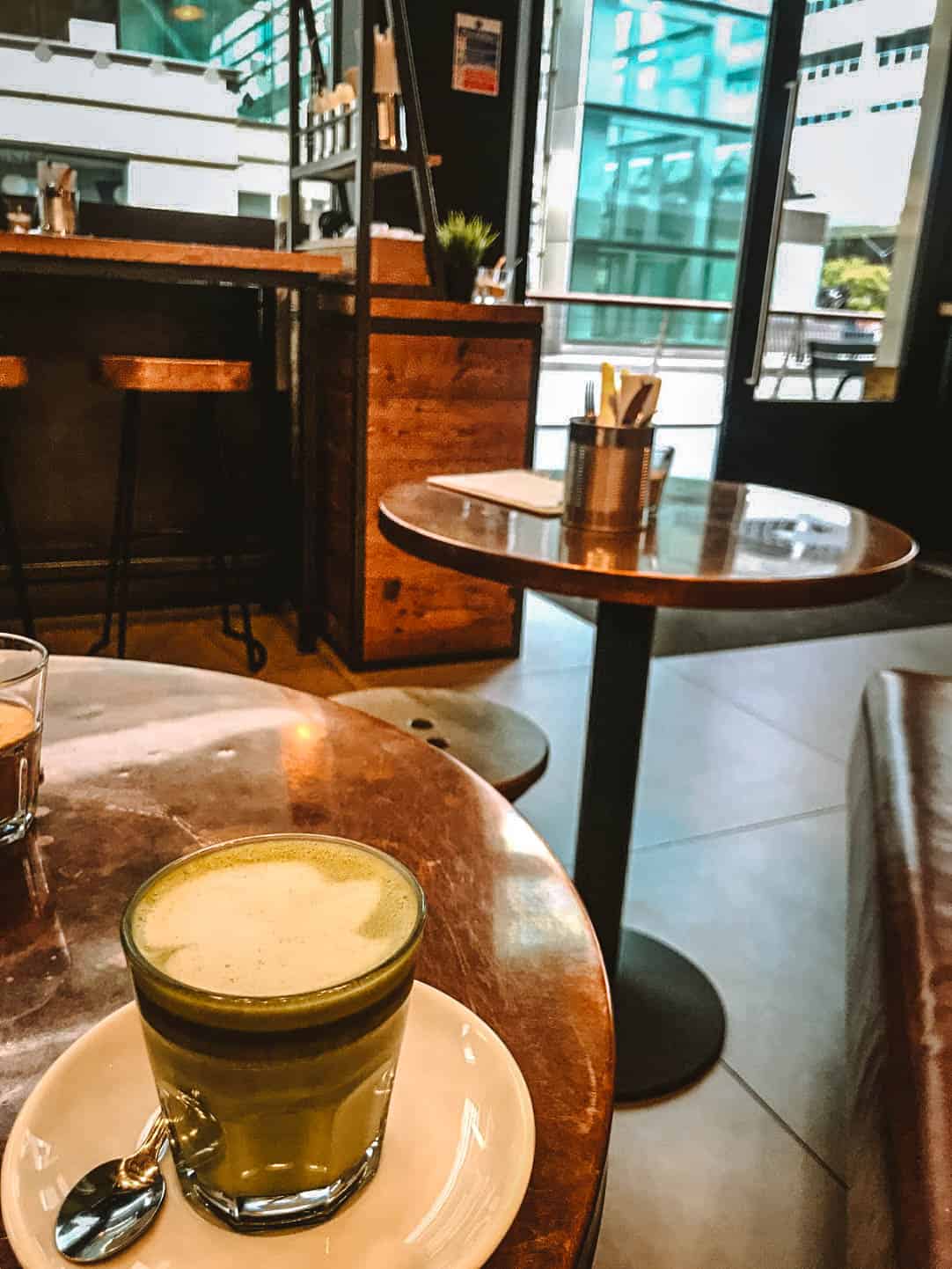
Grab a café first: In Ghent, I’d start the morning at Lloyd Coffee Eatery—a proper café fix before a day of canals and towers.
Stay connected: Make sure to set up your Europe eSIM before your trip. It takes less than five minutes, and you’ll have mobile data ready across both cities.
For extra peace of mind: I personally recommend using VisitorsCoverage to compare travel insurance options before your trip—it’s my go-to for finding the right cover whenever I travel.
How Many Days Do You Need for Bruges and Ghent?


To enjoy the beauty of both Bruges and Ghent to the fullest, I’d give yourself three days if you can.
In my opinion, that gives you one full day in Ghent and two days in Bruges, which I think is the nicest balance for a first Belgium trip.
You can do Bruges and Ghent in two days, but it’ll be a tighter trip. You’ll need to keep the Ghent day focused, travel light and maybe just accept that Bruges will be more of a first taste than a full weekend.
Four days is even better if you want to add Brussels, a slower foodie day in the city, museums or an extra night out in Ghent.
In short:
2 days in Bruges and Ghent works if you’re short on time.
3 days in Bruges and Ghent is my ideal version.
4 days in Bruges, Ghent and Brussels gives you a fuller Belgium itinerary.
And yes, you can technically see Bruges and Ghent in one day—but I wouldn’t recommend doing that independently unless you really have no other option.
Bruges or Ghent First?

I’d visit Ghent first, then Bruges.
Ghent makes a brilliant first stop because it has a slightly bigger-city feel without being overwhelming. You can start with St Michael’s Bridge, see the three towers, wander Graslei and Korenlei, visit St Bavo’s Cathedral, walk to Gravensteen Castle and still have time for Ghent cafés, wine bars or jazz scene later too.
Then there’s Bruges.
Lively-ness wise it’s definitely more tourist-filled here than local student buzz, but that just means it’ll be time to lean into the canals, chocolate shops, Markt, the Belfry, Burg Square, Bonifacius Bridge and a boat tour without comparing it too closely to Ghent.
If you’re starting in Brussels, this route also makes the best sense by train:
🚂 Brussels → Ghent → Bruges → Brussels
Or, if you’re continuing through Belgium or towards the coast:
🚂 Brussels → Ghent → Bruges → onward travel
You can do it the other way around, of course. But travel experience wise I think Ghent first and Bruges second works better.
Should You Stay in Bruges, Ghent or Brussels?

I’d say it depends on the kind of trip you want.
Stay in Bruges if you want the most atmospheric base


For a first trip, I’d probably stay in Bruges.
That’s especially true if you’re planning this as a romantic weekend, birthday trip, first Belgium trip or a more polished city break. Bruges is very compact, and staying overnight means you get to enjoy the historic centre before and after the day-trippers.
For my Bruges trip, I stayed at Hotel Acacia, which worked really well because it’s right in the historic centre and only a 3-minute walk from Market Square.
Stay in Ghent if you care more about food, bars and nightlife
Ghent is the better base if you want the trip to feel a bit more local and city-like.
It has more of a student/cultural feel, plus better late-night options if your idea of a good trip includes wine bars, jazz, café terraces, book cafés and a less polished dinner scene.
For Ghent hotels, I’d highly recommend NH Collection Gent, I stayed at their partner hotel NH Collection Brussels Centre and it was perfection.
Read More: The Best Places to Stay in Ghent, Belgium: My Favourite Areas & Hotels for a First Trip
Stay in Brussels if you’re doing a wider Belgium itinerary

My stay at NH Collection Brussels Centre!
Brussels makes sense if you’re arriving by Eurostar, flying in, or planning multiple day trips (like to Bruges, Ghent and Groot-Bijgaarden Castle) without moving hotels.
This works especially well if your trip is Brussels-first, with Bruges and Ghent as day trips.
If you’re mainly focused on Bruges and Ghent though, I’d stay in one of those two cities rather than making every day start and end in Brussels.
Hotel-wise I recommend the NH Collection Brussels Centre I mentioned before, which’ll put you right next to Brussel-Centraal for your trips.
Read More: The Perfect Day Trip from Brussels to Bruges: Train, Tours & My Itinerary
How to Travel Between Ghent and Bruges


The best way to travel between Bruges and Ghent is absolutely by train.
You’ll usually travel between Gent-Sint-Pieters and Brugge / Bruges station, with direct trains taking around 25–30 minutes.
A quick but important note: Gent-Sint-Pieters is not right in the old town. Once you arrive in Ghent, you can take the tram, bus, taxi or walk into the historic centre, depending how much luggage you have and how much you fancy starting your day with a city walk.
Bruges station is easier for a scenic arrival. If you’re travelling light, you can walk into the historic centre in around 15–20 minutes through Minnewater and the Begijnhof, which is exactly how I’d do it.

For train tickets, I’d use the SNCB / Belgian Train app or get your tickets in advance here so you’re not trying to work everything out at the station. They should be from €10 for a one-way.
My Ideal Bruges and Ghent Itinerary for 3 Days


If this was my trip, I’d do:
Day 1: Ghent
Day 2: Bruges
Day 3: Bruges with museums, brewery, food stops or a slower second route
This gives you enough time to understand both cities without pretending you can do every church, castle, museum, canal, waffle, wine bar and chocolate shop in one go.
Day 1: Ghent

Start your Bruges and Ghent itinerary with one day in Ghent.
I’d arrive in the morning, drop luggage at your hotel if needed, then head straight towards the historic centre.
Start at St Michael’s Bridge

For your first proper Ghent moment, go to St Michael’s Bridge.
This is the famous viewpoint where you can see Graslei, Korenlei and Ghent’s three towers: St Nicholas’ Church, the Belfry and St Bavo’s Cathedral.
It’s one of the best places to understand Ghent quickly, with the whole city seemingly lining itself up for you in one view.
From here, wander down towards Graslei and Korenlei.
Walk Along Graslei and Korenlei

Graslei and Korenlei sit on either side of the River Leie, lined with historic façades and lots of lush terrace spots.
This is an area I’d give yourself time to actually enjoy, and if it’s lunchtime or aperol hour, it’s also one of the easiest places to sit outside at cafés like Mi Garba or ‘t Galgenhuis.
Read More: Best Boat Tours in Ghent, Belgium: My Honest Guide to Choosing the Best One for Your Trip
Continue to Korenmarkt, St Nicholas’ Church and the Belfry

From the river, walk towards Korenmarkt and St Nicholas’ Church.
This part of Ghent is very easy to explore on foot, with all the choice you could want to either pop into St Nicholas’ Church, the Belfry and St Bavo’s Cathedral, or admire each from the outside.

If you only pay for one major cultural stop in Ghent, I’d say make it St Bavo’s Cathedral for the Ghent Altarpiece.
Visit St Bavo’s Cathedral

St Bavo’s Cathedral is one of Ghent’s most important stops, especially if you want to see the Ghent Altarpiece, also known as The Adoration of the Mystic Lamb.
Even if you’re not usually someone who builds a trip around religious art, this is one of those rare works that genuinely shapes the city’s identity. You can read more history about it here.
Read More: One Day in Ghent: My Perfect Ghent Day Trip Itinerary
Read More: The Best Things to Do in Ghent, Belgium: My Favourite Sights, Food Stops & Local Gems
Quick Detour: Werregarenstraatje / Graffiti Street


Before lunch, I’d make a quick detour to Werregarenstraatje, aka Graffiti Street.
It’s not a long stop, but it’s a good one, especially to have a peek at the less polished side of Ghent between all the towers, churches and medieval façades. (the alley’s basically an ever-changing open-air street art spot, so what you’ll see will depend entirely on when you visit!).
I wouldn’t plan your whole Ghent day around it, but if you’re already around the historic centre, it’s an easy little add-on—and a cool reminder that Ghent isn’t just pretty old buildings and canal views.
Read More: Unusual Things to Do in Ghent, Belgium
Lunch in Ghent

Lunch with a view at De Rechters!
For lunch in Ghent, I’d choose based on what kind of day you want.
For something central and convenient, De Rechters is right by St Bavo’s Cathedral on Sint-Baafsplein with the best people-watching in town. I loved my lunch here.
For something vegetarian/flexitarian, De Warempel is a good one to keep in mind.
If you’re nearer Kraanlei and want something more casual, look at De Parkiet or Panotto.
For a café/brunch-style stop, I really loved Lloyd Coffee Eatery!
Read More: 5 of the Best Restaurants in Ghent, Belgium: My Favourite Places to Eat
Read More: Best Cafés in Ghent, Belgium
Afternoon: Gravensteen Castle


After lunch, make your way to Gravensteen, also called the Castle of the Counts.
This is one of the big reasons Ghent deserves a place in your Belgium itinerary.
You’re not just looking at another square or church; visit here and suddenly you’re standing in front of a medieval fortress right in the city centre!


(If you have time, definitely go inside and do the audio guide).
If your day is already feeling full, you can still walk around the outside and continue towards Patershol and Kraanlei. But I personally really think it’s worth going inside.
Read More: Gravensteen Castle Ghent: Tickets, Tips & What to Expect
Add Huis van Alijn


Near Kraanlei, I’d also consider visiting the admittedly quite random Huis van Alijn / House of Alijn.
It’s a quirky museum with a focus on the daily life, customs and ordinary rituals of Ghent locals, with a really quaint and beautiful courtyard/café if you want a breather from your Ghent exploring.
Wander Patershol and Kraanlei


Before dinner, wander through the historic Patershol neighbourhood and the sleepy Kraanlei waterfront.
Patershol is one of Ghent’s oldest neighbourhoods, tucked near the castle, with narrow lanes and a lots of restaurants to tempt your appetite. Kraanlei is a nice waterfront pocket of the city too, and home to some of my recommendations like House of Alijn, De Parkiet and Panotto.
Evening: Wine, Jazz or a Book Café

An early evening read & wine at Le Bal Infernal!
For evening in Ghent, I’d go for something loved and local like:
- Hot Club Gent for jazz
- Edelrot for natural wine
- Bar Terroir for wine, cheese and food
- Café ’t Galgenhuis for a tiny historic beer stop
- Le Bal Infernal for an ecstatically cool used book café
- Bookz&Booze for books with a drink…
If you’re staying in Ghent overnight, this is why you’ll be glad you didn’t just come for three hours!
Day 2: Bruges

On day two, take the train from Ghent to Bruges.
The journey is only 36 minutes, so don’t need to treat it like a stressful travel day. Have a calm breakfast affair at a Ghent café, take the train mid-morning, then start your Bruges day from the station.
If you’re staying overnight in Bruges, drop your bag at your hotel first!
Walk in Through Minnewater and the Begijnhof

If you’re arriving at Bruges station and travelling light, I’d walk into town through Minnewaterand the Begijnhof.
Minnewater, aka the Lake of Love is spilling with stunning water views and a nice introduction to the city before getting to the historic centre.
Then you’ve got The Begijnhof nearby, with whitewashed houses and a quiet courtyard that feels completely different from Markt (where you’ll inevitably need to snap a photo).


Continue to the Church of Our Lady and Bonifacius Bridge


From the Begijnhof, continue towards the Church of Our Lady and Bonifacius Bridge.
It’s a busy-for-a-reason kind of spot, with canal views, brick walls, half-timbered buildings and a Bruges-filled view.
See Rozenhoedkaai

Next, head to Rozenhoedkaai (Rosary Quay).
This is the canal viewpoint you’ve probably seen in every Bruges guide: with water, boats, rooftops and old façades all in one very postcard-worthy frame.
It gets busy, but I still think it belongs on a first Bruges itinerary.
P.S – If you’re trying to avoid the biggest crowds, come earlier or later in the day. If you’re there at midday, just accept that everyone else had the same idea.
Burg Square and the Basilica of the Holy Blood

From Rozenhoedkaai, walk over to Burg Square.
This is where you’ll find Bruges City Hall and the 12th-century Basilica of the Holy Blood (also very close to Markt!).
If the basilica is open, pop inside. It doesn’t need to take over the whole day, but it’s one of the most important small stops you could make.
Markt and the Belfry

Then head to Markt.
This is Bruges’ main square which you’re bound to have seen before, with colourful stepped-gable buildings, café terraces, horse-drawn carriages and the Belfry standing over it all.
If you want the viewpoint, climb the Belfry. It has 366 steps, so I’d only do it if you actually care about the view.

If you’re more interested in canals, chocolate shops, cafés or a boat ride, admire it guilt-free from the square.
Read More: One Day in Bruges: My Perfect Bruges Day Trip Itinerary
Lunch, Waffles or Frites

For lunch in Bruges, keep it central.
You can do a sit-down Belgian lunch, a waffle, frites or something quick depending how much time you want to spend indoors.
For waffles, look at Chez Albert, House of Waffles or Otto Waffle Atelier.
For Belgian food, I’d look at Cambrinus, De Koetse, or Lion Belge on what you fancy.
For frites, make sure you have at least one cone of crunchy goodness during your trip from someplace like ’t Walpoortje (near Begijnhof). This is Belgium after all. It’d be rude not to!
Read More: Where to Eat in Bruges: Belgian Dishes, Chocolate, Waffles & Beer to Try
Afternoon: Take a Bruges Canal Boat Tour

A Bruges canal boat tour is one of the main things I’d book on a first trip.
Yes, it’s touristy. And yes, you simply must.
A lazy boat trip in Bruges gives you a different view of the city, breaks up the walking and lets you see Bruges from the water instead of only from bridges and squares.
If you only do one activity in Bruges, I’d make it this (plus this one is only 30 minutes—in and out!).
Read More: Bruges Canal Boat Tour: My Honest Review & What to Know Before You Go
Chocolate, Coffee or Belgian Beer


Before dinner, choose one more stop based on your priorities. And yes, I’m making chocolate one of your priorities when it comes to Bruges.
For chocolate, I’d dip into Dumon Chocolatier, The Chocolate Line, La Belgique Gourmandeor Atelier Verbaert.
For hot chocolate, The Old Chocolate House is the one I’d keep in mind.
On the coffee side, look at Coffeebar Adriaan, Dees Koffiebranders or We Are Coffee Makers .
And for beer, make it ’t Brugs Beertje, Café Rose Red, Cambrinus or De Halve Maan Brewery.
This is where Bruges is at its best!
Day 3: More Bruges

For your third day, I’d recommend staying in Bruges.
You’ve already had one day in Ghent and one first-trip day in Bruges, so this is where you can go a bit deeper without repeating the exact same route.
Visit Groeningemuseum or Gruuthusemuseum

If you want a history-promising museum, choose Groeningemuseumor Gruuthusemuseum.
Groeningemuseum is the better pick if you’re interested in Flemish art, and Gruuthusemuseum is a good option if you prefer a city palace setting and a look into Bruges’ old wealthy households (I really enjoyed the balcony at this one).

I wouldn’t try to do every museum in Bruges on this itinerary. Choose one and wander!
Visit De Halve Maan Brewery

If you like Belgian beer, add De Halve Maan Brewery to your itinerary.
It’s in the historic centre near Walplein, so easy to pair with a route through Minnewater, the Begijnhof or the southern side of the city.
You can book a brewery visit, and revel in an evening of golden Belgian beer (my kind of night).
Wander Langestraat and Hoogstraat

For a slightly less obvious Bruges walk, head towards Langestraat and Hoogstraat.
This is a cool area for vintage shops, creative businesses, independent food spots and bars rather than staying only between Markt, Rozenhoedkaai and the chocolate shops.
It’s still Bruges (so no less charm, I assure you), but it definitely gives you a different side of the city.
Read More: Unique Things to Do in Bruges: Less Obvious Stops I Loved After Visiting Twice
Add a Final Café or Canal Walk

For your final afternoon, I’d settle into a Bruges walk along the canals, have a browse a few shops or go back to the viewpoint you liked most.
If you stayed at Hotel Acacia or somewhere else central, the good news you don’t need a grand final plan.
Given you’re so central you can wander out, have one last Bruges moment, then collect your bag quick and easy before you head back to the train.
Bruges and Ghent Itinerary: 2 Days


If you only have two days for Bruges and Ghent, I’d plan it more like this:
Day 1: Ghent

Arrive in Ghent in the morning and then make your way through:
- St Michael’s Bridge
- Graslei and Korenlei
- Korenmarkt
- St Nicholas’ Church
- Ghent Belfry
- St Bavo’s Cathedral
- Sint-Baafsplein and NTGent
- Huis van Alijn or Graffiti Street
- Lunch near the historic centre
- Gravensteen Castle
- Dinner or drinks in Ghent
If you’re travelling light, you can take the train to Bruges in the evening and sleep there (this is the hotel I recommend).
That way you wake up in Bruges for day two rather than spending the best part of the morning moving bags around.
Day 2: Bruges

Ready for your second day? Let’s head to Bruges…
I’d start early with Markt, the Belfry, Burg Square, Rozenhoedkaai, Bonifacius Bridge, a canal boat tour, lunch, chocolate and a walk through Minnewater and the Begijnhof before heading back to Brussels or continuing your trip.
It’s a bit of a tighter itinerary, but you’ll still get a genuine taste for the city.
Bruges and Ghent Itinerary: 4 Days


If you have four days, I’d add Brussels into the mix.
Read More: One Day in Brussels: My Perfect Brussels Day Trip Itinerary
Day 1: Brussels


Arrive in Brussels and spend the day around Grand Place the cool Sablon neighbourhood, wander the Royal Gallery of Saint Hubert and the insides of St Michael and St Gudula Cathedral, get your obligatory photo with Manneken Pis, have some Belgian chocolate, waffles and beer and do a bit of the Comic Strip Trail if you have time!
P.S. – If you’re arriving by Eurostar from London or the Eurostar from Paris, Brussels is the best way to get to Belgium before heading to the smaller cities like Ghent, Bruges, Antwerp and Mechelen.
Day 2: Ghent

Then take the train to Ghent.
Spend the day around St Michael’s Bridge, Graslei, Korenlei, St Bavo’s Cathedral, the Belfry, Gravensteen Castle, Patershol, Kraanlei and one of Ghent’s cafés or wine bars.
Then sleep in Ghent or spend the night in Bruges, depending how you want to split the trip.
Day 3: Bruges
Time to travel to Bruges…here I’d do the main historic centre route: Minnewater, Begijnhof, Church of Our Lady, Bonifacius Bridge, Rozenhoedkaai, Burg Square, Markt, the Belfry and a canal boat ride (+ chocolate stops, beer—the works!)
Then you can spend the night at a hotel near the city centre like Hotel Acacia.
Read More: Where to Stay in Bruges: My Favourite Areas & Hotels for a First Trip
Day 4: More Bruges or Back to Brussels

All good things must come to an end. Use your final day for museums, De Halve Maan Brewery, Langestraat and Hoogstraat, chocolate shopping or a final canal walk.
Then return to Brussels to travel onwards!
Can You Visit Bruges and Ghent in One Day?


You can visit Bruges and Ghent in one day, but I’d only do it if you’re booking a tour from Brussels or if this is genuinely your only chance to see both.
Independently, it’s a lot, so if you are doing Bruges and Ghent in one day, I’d book an organised Bruges and Ghent tour from Brussels so the transport, timings and route are handled for you.
Can You Do a Bruges and Ghent Day Trip from Amsterdam?

You can technically do a lot of things, including a Bruges and Ghent day trip from Amsterdam—but I wouldn’t make that my first choice.
It’s too much travel for one day, especially if you want to enjoy both cities rather than spend most of the day checking train platforms.
If you’re coming from Amsterdam, I’d turn it into a proper Belgium trip instead like:
Amsterdam → Antwerp or Brussels → Ghent → Bruges → Brussels or back to Amsterdam.
That’ll give your trip a little more room to breathe plus make all the travel time feel worthwhile.
Should You Choose Bruges or Ghent If You Can Only Visit One?

If you can only visit one, choose Bruges if you want canals, chocolate shops, the Belfry, Markt, boat rides and a smaller historic centre that feels made for a first Belgium trip.
Choose Ghent if you want a more lived-in city with a castle, book cafés, wine bars, street art, restaurants, jazz and a slightly less polished feel.
I don’t think one is automatically better, it just suits different trips!
Read More: Bruges or Ghent? My Honest Comparison After Visiting Both
What to Book Before Your Bruges and Ghent Trip

Before your trip, I’d sort:
- All your Belgium train tickets (Including your Eurostar from London or the Eurostar from Paris; your Brussels to Ghent train; your Ghent to Bruges train, and your Bruges to Brussels train depending on your trip.
- Your hotel in Bruges and/or Ghent (I recommend Hotel Acacia, where I stayed for Bruges and NH Collection Gent for Ghent).
- Your Bruges canal boat tour (only if you’re doing it with a walking tour too, otherwise you can just walk in at this one)
- Gravensteen Castle tickets if you want to go inside
- Ghent Altarpiece tickets if St Bavo’s Cathedral is a priority
- A Bruges walking tour or Bruges food tour if you want more context
- A Bruges and Ghent tour from Brussels if you’re short on time
- Dinner reservations
P.S. – I’d keep your luggage light if you’re moving between the two cities. Bruges and Ghent are both walkable, but cobbled streets and rolling suitcases aren’t quite the love story…
Final Thoughts on Visiting Bruges and Ghent in One Belgium Trip
Bruges and Ghent definitely aren’t copy-paste versions of each other, and they shouldn’t be treated like it.
Bruges gives you canals, swans, chocolate shops, Markt, the Belfry, and the swoon of the Rozenhoedkaai quayside.
Ghent gives you St Michael’s Bridge, Graslei and Korenlei, St Bavo’s Cathedral, Gravensteen Castle, book cafés, wine bars, jazz, street art and a city that feels a little more lived-in.

And before I love you and leave you, remember I’d give yourself three days if you can: one day in Ghent, two days in Bruges.
But even with two days, you can still make a brilliant trip of it if you keep the route realistic, use the train and feel satiated with a taste of each, perhaps, enough to make you come back for seconds…
Have the best trip.
Happy travels,
Candace x
FAQ: Bruges and Ghent Itinerary
💭 How many days do you need in Bruges and Ghent?
I’d plan at least two days for Bruges and Ghent, but three days is better.
With two days, you can spend one day in Ghent and one day in Bruges. With three days, I’d do one day in Ghent and two days in Bruges so you have time for the main sights, a canal boat, food stops, museums or a brewery visit.
💭 What is the best Bruges and Ghent itinerary for 3 days?
For a 3-day Bruges and Ghent itinerary, I’d spend day one in Ghent, day two seeing the main Bruges sights and day three going deeper in Bruges with museums, De Halve Maan Brewery, Langestraat, Hoogstraat, chocolate shops or a final canal walk.
💭 What is the best Bruges and Ghent itinerary for 2 days?
For 2 days in Bruges and Ghent, I’d spend day one in Ghent, then travel to Bruges that evening and sleep there. Then spend day two in Bruges seeing Markt, the Belfry, Burg Square, Rozenhoedkaai, Bonifacius Bridge, the Begijnhof, Minnewater and a canal boat.
💭 What is the best Bruges and Ghent itinerary for 4 days?
For 4 days, I’d add Brussels. Spend day one in Brussels, day two in Ghent, day three in Bruges and day four on more Bruges or a final Brussels day before travelling home.
💭 Can you visit Bruges and Ghent in one day?
Yes, you can visit Bruges and Ghent in one day, but I’d only do it as an organised tour from Brussels. Independently, it’s a lot of moving around and you’ll barely get enough time to enjoy either city properly.
💭 Is Ghent better than Bruges?
Ghent isn’t better than Bruges; it’s different. Bruges is smaller, more polished and more centred on canals, chocolate shops and postcard views. Ghent feels more like a real city, with a castle, university feel, book cafés, bars, restaurants, street art and a much stronger nightlife in my opinion.
💭 Which should I visit first, Bruges or Ghent?
I’d visit Ghent first, then Bruges. Ghent gives you the bigger-city feel, castle, cathedral and lively food/drink scene first. Bruges works beautifully afterwards as a canal-filled historic finale, of sorts.
💭 How do you get from Ghent to Bruges?
The easiest way to get from Ghent to Bruges is by train. Trains usually run between Gent-Sint-Pieters and Brugge / Bruges station, and the journey typically takes around 25–30 minutes. You can get your train tickets here!
💭 Is Bruges or Ghent better for a day trip?
Bruges is better if you want a compact, highly scenic day trip with canals, chocolate shops, Markt, the Belfry and a boat ride. Ghent is better if you want a bigger-feeling city with more restaurants, bars, cultural sights and a castle.
💭 Should Ghent be on my Belgium itinerary?
Yes, I think Ghent should absolutely be on your Belgium itinerary if you have more than a couple of days. It pairs especially well with Bruges but the two cities feel different enough to make the trip interesting.
💭 Can you walk between Bruges and Ghent?
No, I wouldn’t plan to walk between Bruges and Ghent. They’re separate cities, and the train is much more practical. Save your walking for the historic centres once you arrive.
💭 Is it better to stay in Bruges or Ghent?
I’d satay in Bruges if you want a more atmospheric, romantic, first-trip to Belgium base. I’d stay in Ghent if you want better food, bars, nightlife, and a more lived-in city feel. And I’d stay in Brussels if you’re using it as a transport base for several Belgian day trips.
💭 Can you do a Bruges and Ghent day trip from Brussels?
Yes, you can do a Bruges and Ghent day trip from Brussels, but I’d book a tour if you want to see both in one day. If you’re travelling independently, I’d give each city its own day.
💭 Can you do a Bruges and Ghent day trip from Amsterdam?
You can, but I wouldn’t recommend it independently. It’s a lot of travel for one day. From Amsterdam, I’d turn Bruges and Ghent into a short Belgian itinerary over a few days instead of trying to see both cities between trains.
Plan the rest of your Bruges trip
Still planning? Here’s more of my Bruges guides to help you decide where to stay, what to book and how to make the most of your trip.

Before you book
- Is Bruges Worth Visiting? My Honest Review After Visiting Twice
- Bruges or Ghent? My Honest Comparison After Visiting Both
- The Best Time to Visit Bruges: When I’d Go Again
Bruges itineraries
- One Day in Bruges: My Perfect Bruges Day Trip Itinerary
- My Bruges Weekend Itinerary: How I’d Spend 2 Days in the City
- How to Take a Day Trip from Brussels to Bruges
- Bruges and Ghent Itinerary: How to Visit Both in One Belgium Trip
Where to stay and what to book
- Where to Stay in Bruges: My Favourite Areas & Hotels for a First Trip
- Hotel Acacia Bruges Review: My Honest Stay in Bruges
- Best Tours in Bruges: Canal Cruises, Walking Tours & Food Experiences
- Bruges Canal Boat Tour: My Honest Review & What to Know Before You Go
- How to Visit Bruges Without a Car: Train Tips, Walking Routes & Getting Around

![London for First Time Visitors: Your Complete Guide [2026]](https://spcdn.shortpixel.ai/spio/ret_img,q_cdnize,to_auto,s_webp:avif/cdn.shortpixel.ai/spai/q_lossy+ret_img+to_webp/candaceabroad.com/wp-content/uploads/2024/07/London-for-first-time-visitors-1.png)